How to Create a Buyer Persona (Step-by-Step + Free Template)
A practical, no-fluff process to create a buyer persona that actually improves your marketing. Includes the exact fields to fill, where to get real data, and a simple template.
A buyer persona turns a faceless "target audience" into a real person you can write for, sell to, and design around. Done right, it sharpens every email, ad, and landing page. Done wrong, it is a useless document full of guesses. Here is how to create one that works.
Quick definition: A buyer persona is a semi-fictional profile of your ideal buyer, built from real research - who they are, what they want, what frustrates them, and what makes them buy.
Where to get real data (not guesses)
The best personas come from evidence, not imagination:
- Customer interviews (5 to 10 short calls).
- Reviews and testimonials, yours and competitors', for exact language.
- Sales and support conversations.
- Short surveys to past or current customers.
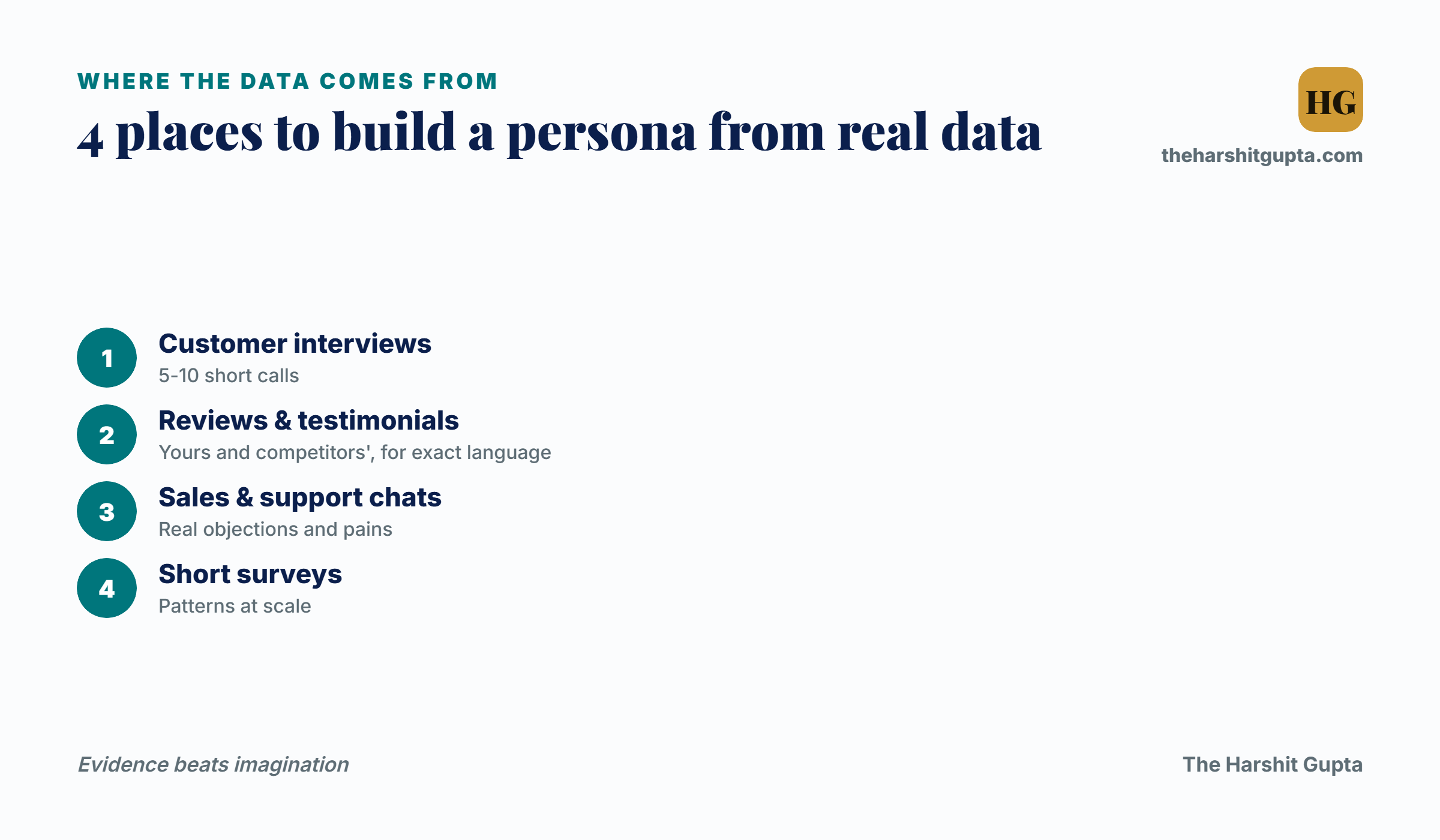
The best personas come from evidence, not imagination.
The 7 fields of a strong buyer persona
| Field | What it captures |
|---|---|
| Snapshot | Role, company type, short bio |
| Goals | What success looks like for them |
| Pain points | The problems that keep them stuck |
| Objections | Why they hesitate to buy |
| Buying triggers | What makes them look now |
| Information sources | Where they learn and who they trust |
| Message that resonates | How to speak to them |
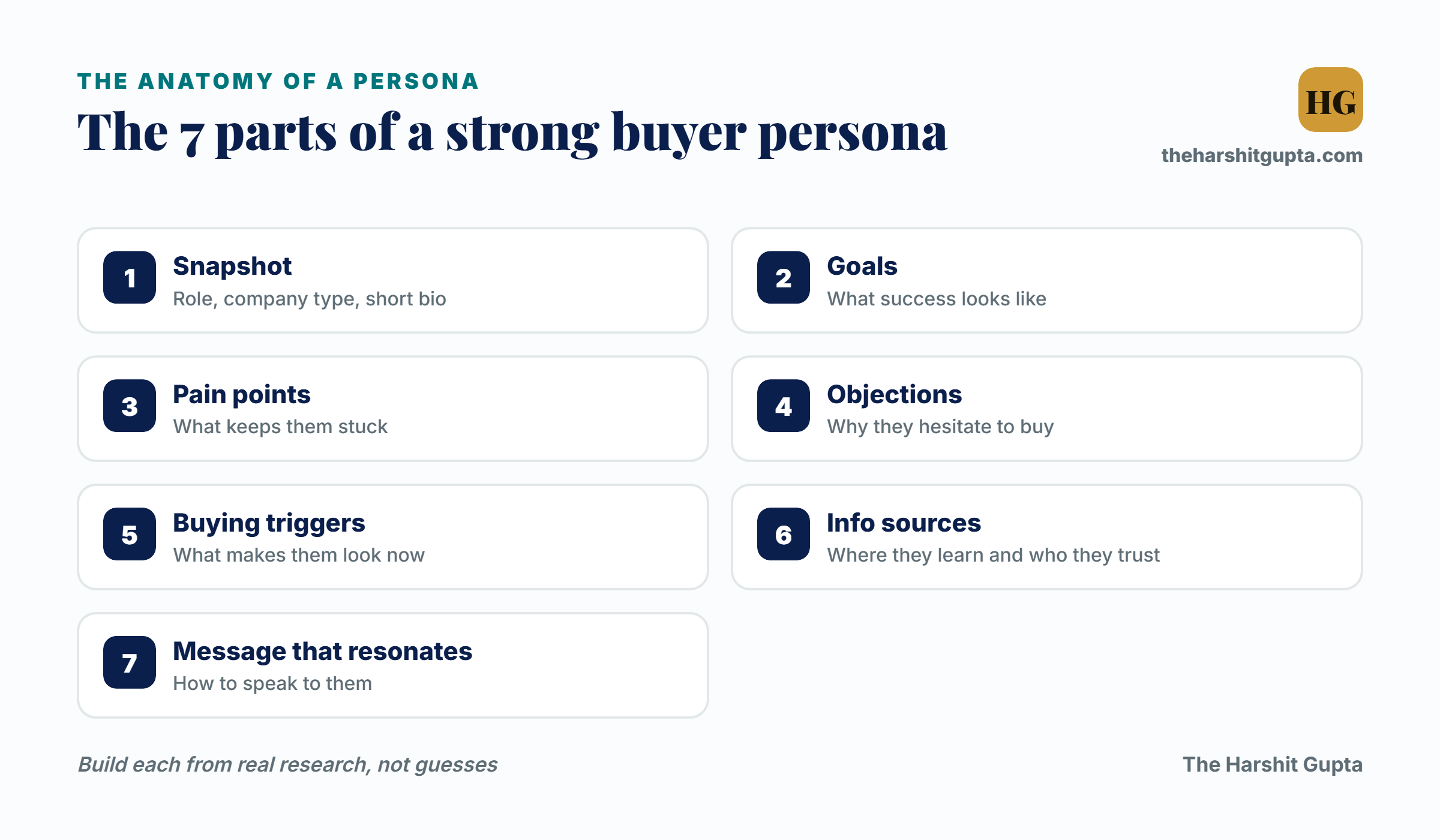
Build each field from research, not guesses.
A filled example
Persona: "Founder Farah." Runs a 12-person B2B SaaS. Goal: predictable pipeline. Pain: marketing feels random and leads are low quality. Objection: "I have been burned by agencies." Trigger: just raised a seed round. Sources: LinkedIn, founder communities. Message that works: "Get clear on exactly who you are for, so marketing finally converts."
A quick example of impact
Illustrative example, not a named client: a team wrote ad copy for "marketers" and got weak results. After building one persona from five interviews, they rewrote the same ad around that person's exact pain ("reports take all weekend"). Same budget, more than double the click-through, because it finally sounded like it was written for one real human.
Common mistakes to avoid
- Inventing details instead of researching them.
- Making the persona about demographics only, ignoring goals and pains.
- Creating ten personas when you need one or two.
Turn the persona into action
Use it everywhere: headline copy, ad targeting, content topics, and sales scripts. It sits on top of your ideal customer profile - and the difference between the two is here.
Key takeaways
- Build personas from research, not imagination.
- Capture goals, pains, and triggers, not just demographics.
- One or two strong personas beat ten shallow ones.
- Use the persona to guide copy, targeting, and sales.
Frequently asked questions
How many buyer personas do I need? Most early businesses need just one or two. Add more only when you clearly serve distinct groups.
What is the difference between an ICP and a buyer persona? The ICP describes the best-fit company or market; the persona describes the person inside it. See ICP vs buyer persona.
How do I research a persona with no customers yet? Interview prospects who fit your guess, read competitor reviews, and join communities your audience uses. See customer research methods.
For research-backed personas done for you, see my ICP and Buyer Persona Research service, and grab the free ICP Clarity Checklist to start.
Want clearer customers before your next campaign?
Download the free ICP Clarity Checklist and turn broad audience guesses into sharper messaging, content, and targeting.
Download the Free ICP ChecklistWant this applied to your business?
Get a free 3-point audit and a clear next step for your marketing.
Get My Free 3-Point Audit